









Week 4 First TrimesterWhat happens to me?
Most women are not aware that they are pregnant until about four to six weeks after conception. By the end of this week, you may notice that you have missed your period. Whether you are aware of it or not, hormone levels start increasing in your body as soon as the egg (ovum) attaches to the inside of your uterus. This helps the uterus maintain the pregnancy. The walls of your uterus become spongy and thicker, creating the perfect environment for the growing fetus. Some of the early signs and symptoms you might detect are:

- Missed menstrual period
- Fatigue
- Mood swings
- Nausea
- Frequent urination (usually starts around six weeks after conception)
- Tender or sore breasts
If you have some spotting, do not worry. Many pregnant women experience a slight staining, called implantation bleeding around this time.
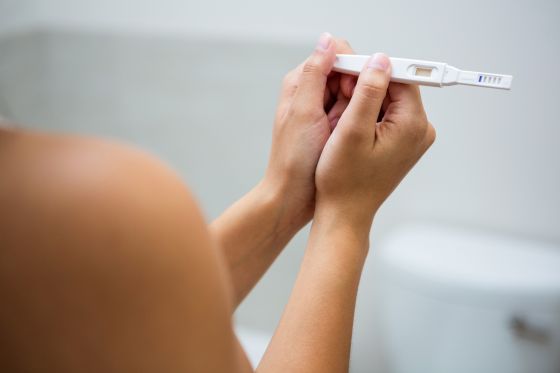
Taking a home pregnancy test a day or so after your missed period can confirm your pregnancy*. It measures the amounts of the pregnancy hormone, hCG, in your urine. The first trimester is the most critical time for formation of the baby. Once again, you will want to stop taking any drugs (even prescription or over-the-counter) until you have had a chance to talk with your doctor. You should be avoiding alcohol, smoke (including second-hand smoke), and limiting or avoiding caffeine.
You may also want to start taking a prenatal nutritional supplement and/or folic acid supplement, as there are very important for the baby’s development, but be sure to consult your physician first.
There is a yolk sac that helps feed the embryo until a placenta is fully formed and can function as the means for the baby to receive nourishment from the mother’s blood.
* Home pregnancy test results are not always 100% accurate. For example, a negative test could mean that it is just too early to tell. For best results visit your doctor.How much will I be showing?
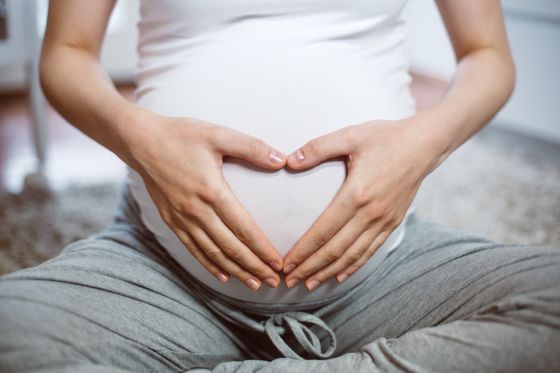
At this point you will notice no changes.
What happens to baby?
At this point you may be wondering what is going on in your womb. The short answer is, a lot! The cells of your fertilized egg, now called a blastocyst (a fluid-filled cluster of cells), are rapidly multiplying. Once the blastocyst completes the journey down the Fallopian tube, it nests in the uterus, where it divides into two parts. The half attached to the uterine wall becomes the placenta, the support system that nourishes the baby. The other half will actually become the baby.
Nerve growth begins when a sheet of cells on the back of the embryo folds in the middle to form a tube, which will become the spinal cord. At one end, the tube enlarges to form the brain's major sections. What will become amniotic fluid begins to collect now. In the weeks and months ahead this fluid will cushion the fetus in the womb.
How big is the baby?
Extremely small, approximately 0.36mm to 1mm.
Tip of the Week
Avoid second hand smoke during pregnancy, as it can be harmful to the baby. Ask those around you to refrain from smoking. Want to figure out your due date? Click Here
Just found out you're pregnant? Don't forget to check out the previous Weeks!
Pregnancy Calendar Disclaimer
|